


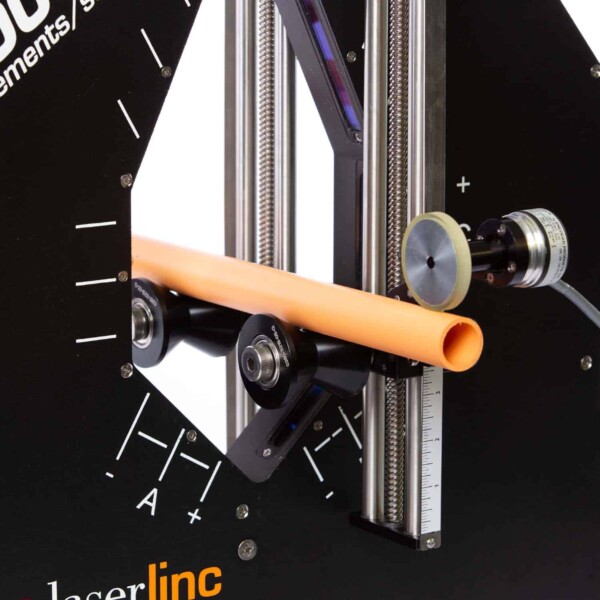

Selecting the best laser micrometre for your needs
– What is the shape or profile of the product: round, rectangular, hexagonal, or other?
– What are the smallest and largest diameters (or dimensions) you need to measure?
– If your product is supposed to be oval, do you need to know when it is not?
– How often do you need to check the dimension(s)?
– What are the most stringent engineering tolerances on the products you are measuring?

Triton™ Triple-Axis Laser Micrometers
Our triple-axis (also called triple-plane) laser micrometers measure products from three directions, precisely calculating product diameter, ovality, and position. These three axes of measurement are coplanar and separated by 60 degrees from each other, and the measurement field is perpendicular to the product.
Triton-series micrometers provide the best average diameter, ovality measurement regardless of product orientation, and are most capable of detecting defects.

Dual-Axis Laser Micrometers
Our dual-axis (also called dual-plane) laser micrometers measure products from two directions, precisely calculating product diameter, ovality, and position. These two axes of measurement are coplanar and perpendicular to each other, and the measurement field is perpendicular to the product.
Dual-axis micrometers provide a good average diameter, ovality measurement, and are capable of detecting defects which do not encircle the product.
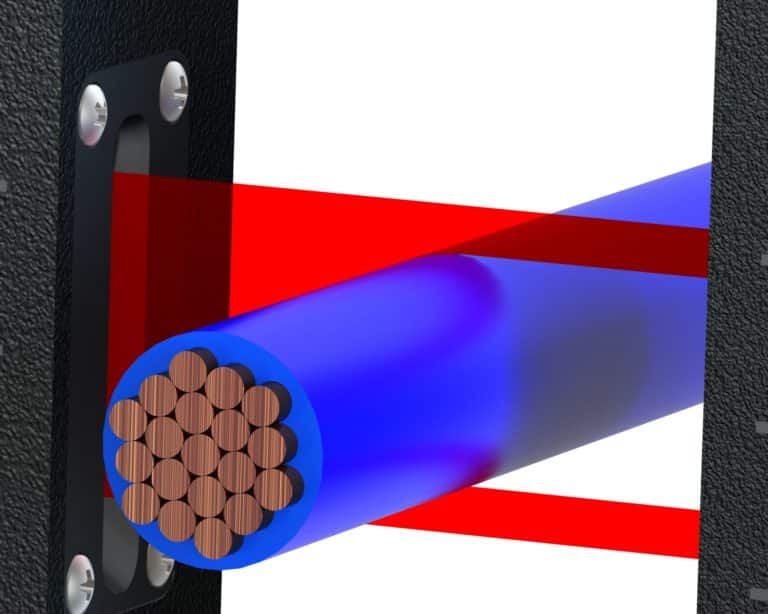
Single-Axis Laser Micrometers
Our single-axis laser micrometers measure product diameter and position from a single direction. Single-axis measurement offers the most application and installation flexibility.
Single-axis micrometers have the most flexible mounting options and can also be used for measurements dual-axis and Triton micrometers cannot make.

Accessories
LaserLinc offers a range of optional accessories to help you get the most out of your laser micrometres. These accessories simplify installation and use, optimise performance, and extend the operating life of your micrometre.
We offer a comprehensive range of fixtures for our laser micrometre line, including:
Air Purge Systems, Stands, Cables, V-Blocks and Through-hole Guides, Calibration Kits, Roller Guides and Window Guards.
In addition to our standard accessories, LaserLinc also design and manufactures custom accessories to meet specific requirements.
