
What is calibration?
Calibration is configuring and verifying a measuring instrument’s accuracy to ensure its readings match a known standard. Calibration is a foundational practice across healthcare, electronics, manufacturing and environmental monitoring. Over time, there is a tendency for results and accuracy to ‘drift’ when using particular technologies or measuring particular parameters such as temperature and humidity. The goal of calibration is to minimise any measurement uncertainty by ensuring the accuracy of test equipment.
Why calibrate?
Calibration is the process of determining the output values of a measuring device in response to a specific excitation. If you want to measure something, you should know the exact properties of your measuring equipment and be sure that your measurement results are comparable with the measurements of third parties. For this purpose, the measuring instrument must be traced back to a national standard. This traceability is regulated and secured by the calibration hierarchy. A calibrated measuring device ensures:
- Precise measurements with known measurement uncertainty
- Comparability of measurement results
- Legal certainty through traceability of the measurement results to a national calibration standard
If you want your measuring device to perform accurate and comparable measurements, your equipment needs to be regularly calibrated in an accredited laboratory. Or you can perform calibration yourself with a traceable system.
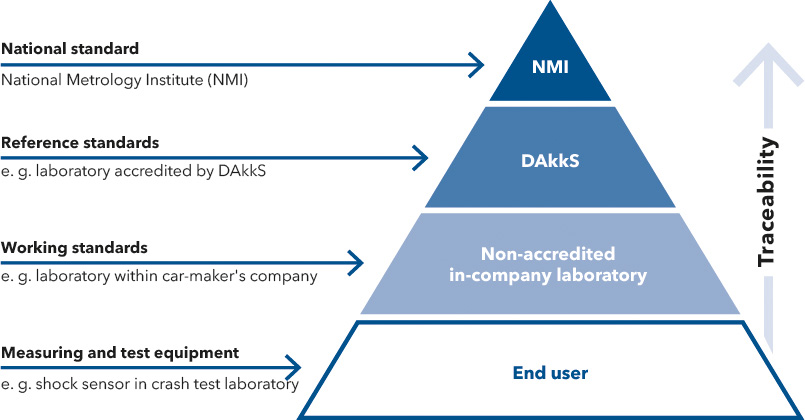
Why a DAkkS (DIN EN ISO/IEC 17025) accredited calibration?
- High reliability of calibration results
- Continuously monitored quality management by external auditors
- International recognition of the calibration results
- Results can be traced back to national and international standards
- Calibration in line with applicable regulations and standards
As a result of calibration, a DAkkS accredited calibration certificate (calibration according to DIN EN ISO/IEC 17025) or factory calibration certificate will be issued. Calibration certificates issued by an accredited laboratory are recognised internationally in the framework of ISO 9000.
How often should I calibrate?
Annual calibration is generally recommended, but the frequency depends heavily on the intensity of use and the environmental conditions. If you have purchased a new instrument, this should be calibrated before its first use to establish a baseline.
Techni Measure proudly presents a collection of vibration and acoustic calibration systems, all expertly crafted by SPEKTRA. Systems are available from very low-frequency long-stroke shaker systems to high-frequency shock systems. Additionally, we offer mobile calibration solutions, alongside a diverse array of exciters and essential components, designed to meet the diverse needs of any testing environment. Contact us today to see how we can help with your calibration needs.
