
What is a sound level meter?
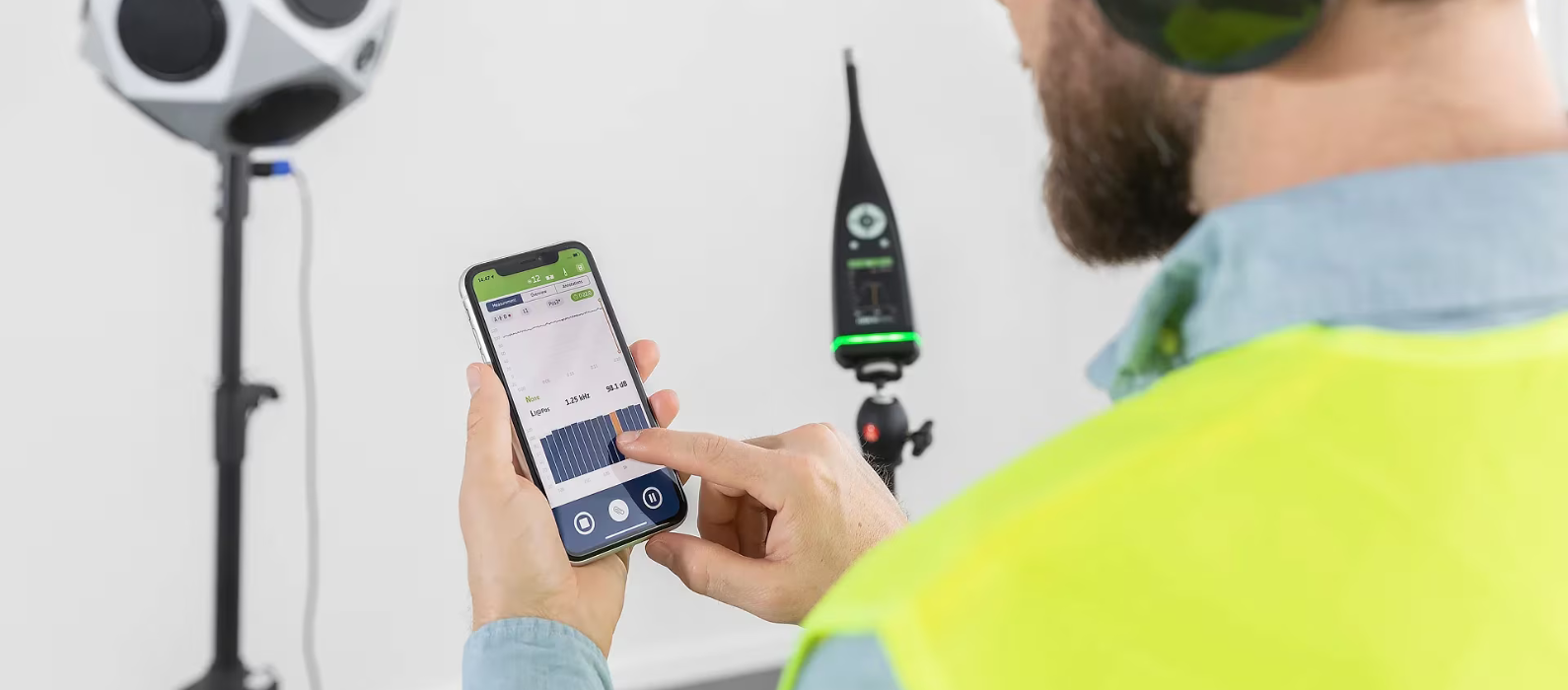
A sound level meter is a measuring instrument designed to measure sound levels in a standardised way. Commonly referred to as a sound meter, noise meter, decibel meter, or sound pressure level (SPL) meter, a sound level meter is designed to respond to sound in approximately the same way as a human ear.
The purpose of a sound level meter is to give objective, reproducible measurements of sound pressure levels (SPL). Sound level meters measure noise from various sources, including industrial plants, traffic, and construction. In urban areas, excessive noise pollution impacts residents and workers. Here at Techni Measure, we are proud to offer HBK – Hottinger Brüel & Kjær Sound Level Meters.
How does a Sound Level Meter Work?
At its very core, a sound level meter basically consists of a microphone, a preamplifier, a signal processing unit, and a display.
The most suitable type of microphone for a sound level meter is a condenser microphone, which combines precision with measurement reliability. The microphone converts the sound signal to an equivalent electrical signal. The electrical signal produced by the microphone is at a very low level and must be enhanced by a preamplifier before reaching the main processor.
Signal processing applies frequency weightings and time weightings to the signal, as specified by international standards such as IEC 61672 – 1, which a sound level meter complies with.
Measurement Applications
Sound level meters and analysers are used to measure and manage noise from a variety of sources. They are often employed in environmental noise assessment from sound sources, such as industrial plants, road and rail traffic, and construction work.
In urban environments, noise pollution or excessive noise exposure directly affects the people who live and work in the affected areas. To ensure noise regulations are followed, noise is measured from a variety of sources, such as sports events, outdoor concerts, parks, and residential or commercial neighbourhoods. Each sound/noise source is defined by its own set of characteristics, which can pose challenges for the professionals assessing them.
Which type of Sound Level Meter should I choose?
There are two types of Sound Level Meters on offer: B&K 2245 & HBK 2255.
The main difference between the sound level meters is that the HBK 2255 is a more advanced sound level meter designed for complex, varied workloads, while the B&K 2245 is used for general purposes.
Both sound level meters are class 1 and compatible with the same mobile and PC apps. However, the 2255 model is designed for more demanding tasks, offering advanced frequency analysis, support for weather station integration, and up to nine programmable timers for scheduled measurements.
When is the right time to consider upgrading your sound level meter?
Having the right tools doesn’t just streamline your work; it’s essential for good business. If you’ve been relying on the same trusty sound level meter for over a decade, you might be thinking, “If it ain’t broke, why fix it?”
But before you dismiss the idea, here are a few things to consider:
1) New technology can enhance your experience and save you time! Imagine having a meter that displays results directly on the device, eliminating the need for manual calculations.
2) Compatibility matters! Is your old software outdated now that you’ve upgraded your PC?
3) What if your meter breaks? As spare parts become harder to find, repairs could get tricky and very expensive.
If your meter is 10+ years old and due for calibration, it might be time to evaluate its efficiency. Could investing in a newer model be a smarter choice? Don’t miss our trade-in offer!
We are excited to announce our current trade-in promotion! You can exchange your old Class 1 qualifying sound level meter for a discounted B&K 2245 or HBK 2255. Additionally, if you’re trading in an old qualifying Brüel & Kjær sound level meter, we can extend discounts on new licenses for the B&K 2245 or HBK 2255 as well. Reach out to us today to find out more!
