
Pressure measurements have always been critical in industries such as manufacturing, aerospace, automotive, healthcare and many more. However, in a rapidly evolving global market, researchers must pursue enhancements in performance, quality, efficiency and safety. A deeper understanding of contact pressure is crucial for driving these enhancements. The Tekscan release of temperature mapping last year has allowed engineers to use temperature mapping to visualise temperature propagation across critical contact areas. Combining temperature and pressure enables deeper insight into material behaviour, safety and performance.
The automotive industry is a highly competitive and rapidly evolving global marketplace. Automotive engineers and researchers have been utilising pressure measurements for decades, and today they’re turning to temperature measurements alongside pressure. Engineers can now gain deeper insights into brake systems to battery modules, our thin Tekscan flexible sensors capture critical data between contacting surfaces to support better design, validation and quality control.
What is Pressure Mapping?
Even between relatively flat surfaces, the interface pressure distribution is often not uniform, with localised areas of peak pressure. Pressure mapping technology provides insight into areas that may impact design and quality.
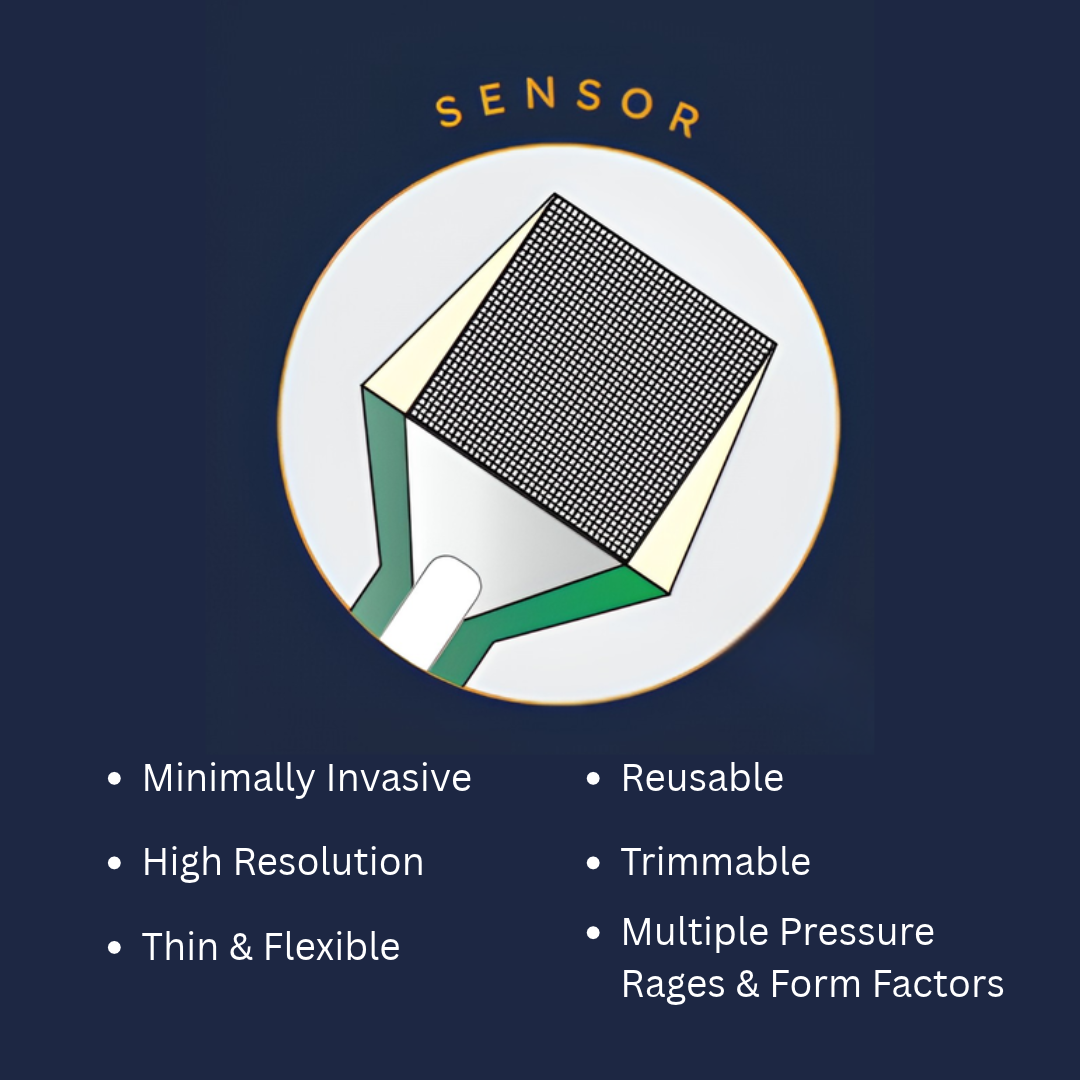
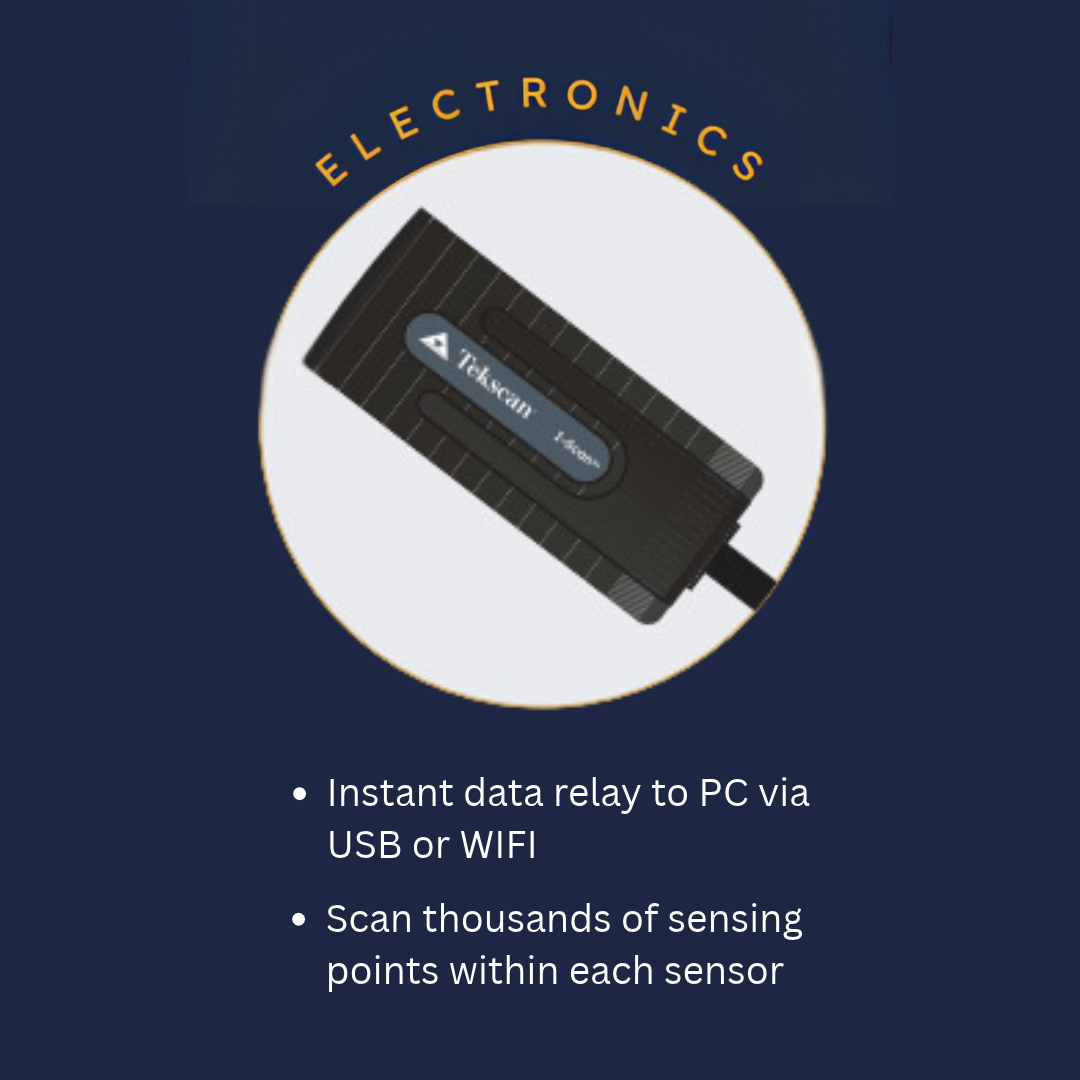
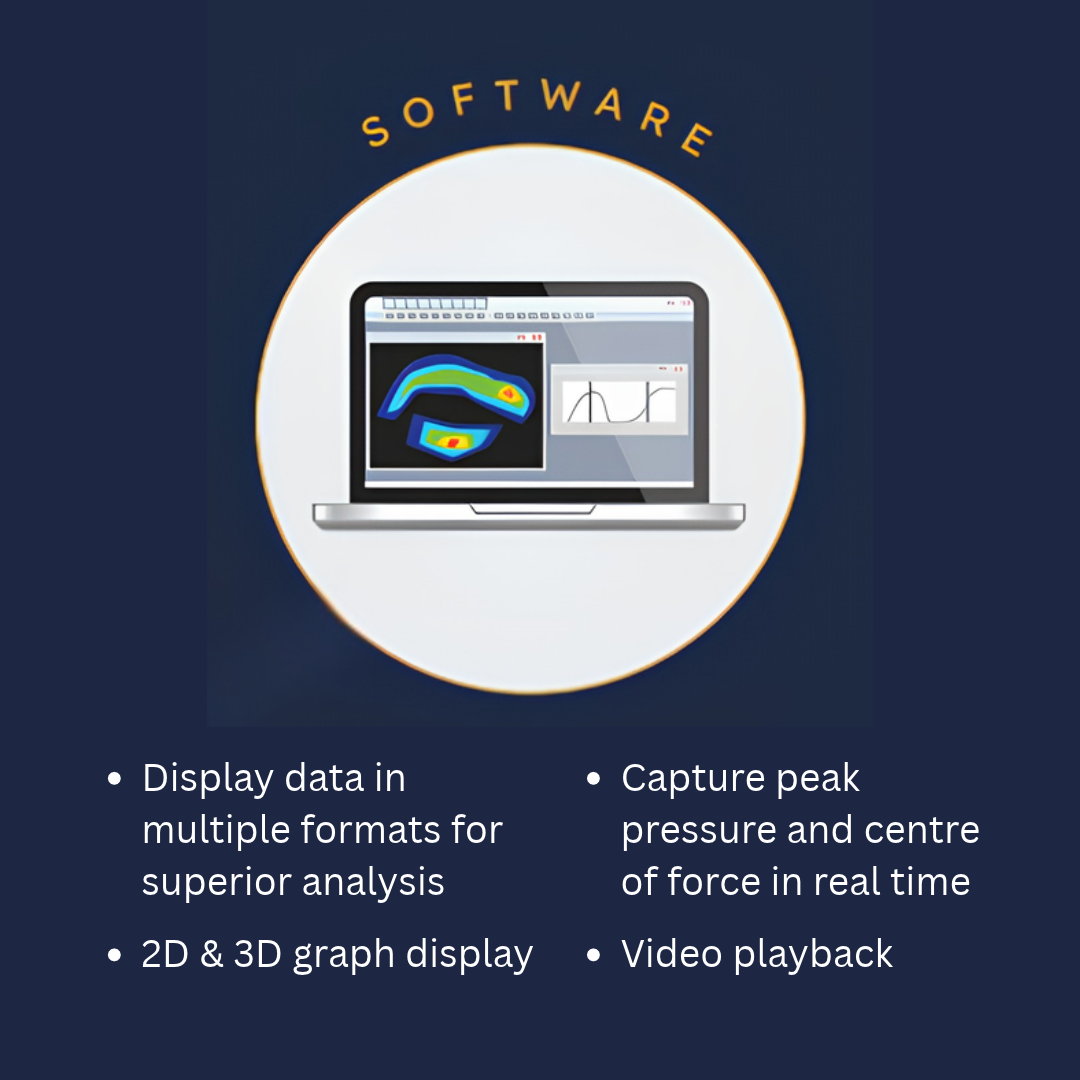
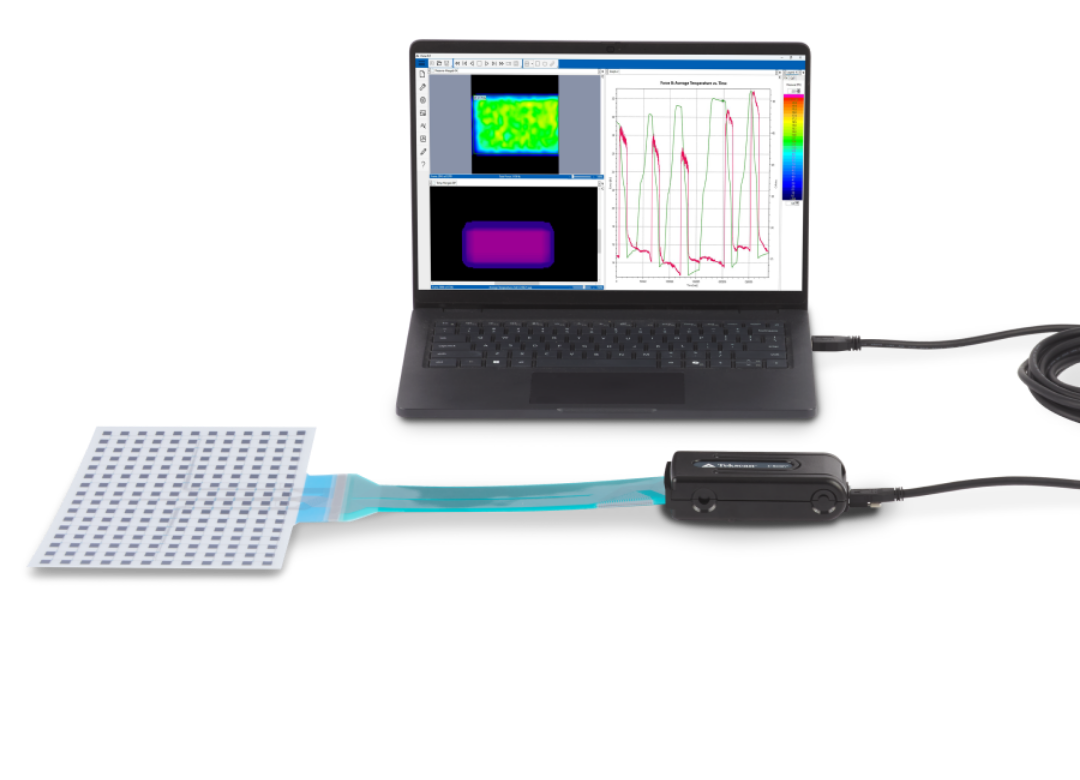
Pressure mapping systems consist of 3 components: sensors, scanning electronics and software to deliver real-time, actionable data in ways other methods cannot.
Components of a Tekscan Surface Sensing System
Applications where Pressure & Temperature Data Drive Results
The following applications highlight common automotive applications where tactile surface sensing, through pressure and temperature mapping, provides critical data. Check out how engineers use this information to solve design challenges, improve performance and accelerate development.
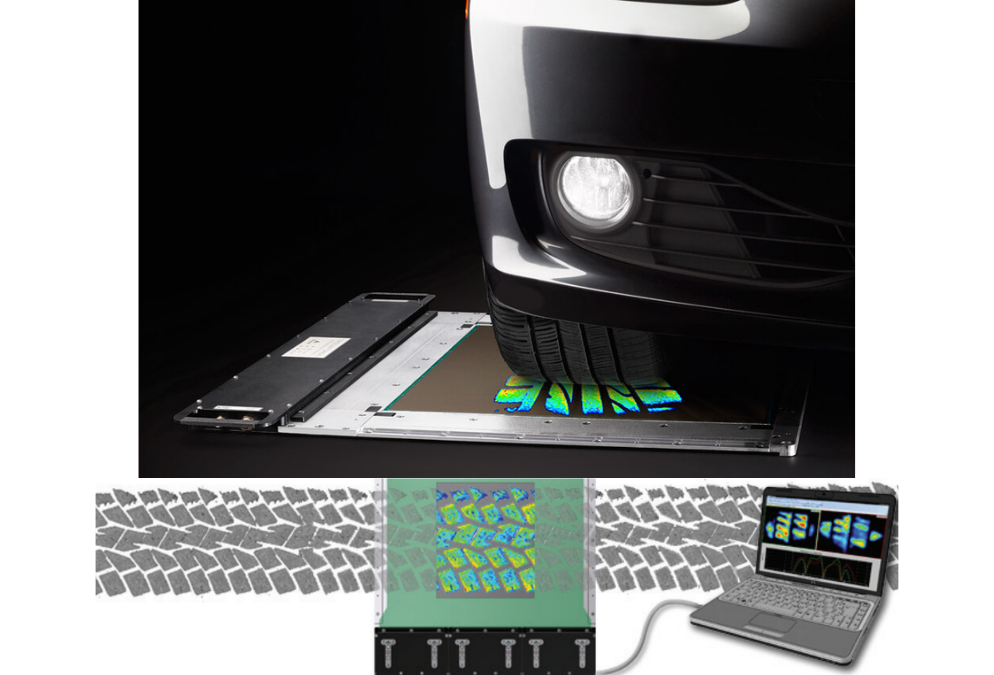
1) Tyre Tread
It is critical to understand tyre behaviour during motion to ensure high performance tyre’s are designed. Tyre manufacturers need detailed insight into how tread patterns and compounds perform during key dynamic events such as cornering, braking, acceleration, and deceleration. Void ratio analysis is also vital to evaluate a tread’s ability to displace water and maintain grip in wet conditions.
Using a tactile pressure sensor mounted on a steel plate, with electronics housed in metal enclosures, engineers can capture precise pressure distribution data. Measurements can be taken in both static and dynamic conditions, including camber, toe, and suspension alignment scenarios.
The point-of-contact data is analysed using specialised software to determine perimeter area, cross-sectional pressure profile, measurement of footprint length and width, and other configurable parameters. This data supports a wide range of development and testing activities, including:
• Evaluating and comparing tread patterns and designs
• Assessing material and rubber compound performance
• Performing quality control checks
• Benchmarking competitor tyres
• Studying predictive wear based on road surface
• Analysing camber and suspension effects
• Fine-tuning race vehicle setup
2) Fuel Cell Stack Assembly
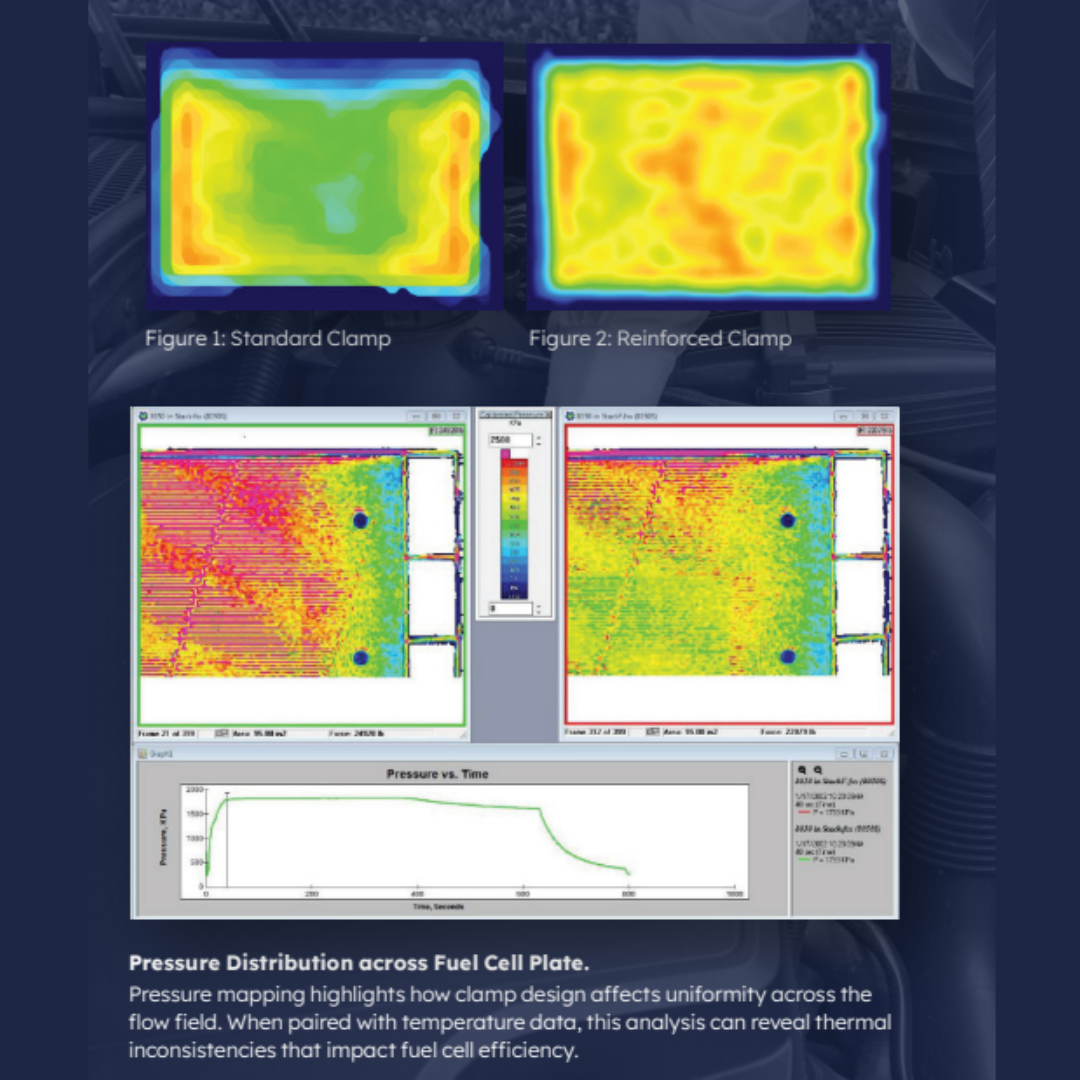
Fuel cells utilise tightly stacked thin plates to manage the flow of hydrogen (or hydrocarbons) and oxygen. It is essential to maintain uniform contact pressure between these plates to prevent leakage and to ensure efficient and consistent performance over time.
Both clamping pressure and clamping torque play a significant role in influencing pressure distribution within the stack. Engineers can use tactile pressure mapping systems to visualise and quantify these effects, allowing for precise optimisation of clamping strategies. Real-time feedback during dynamic testing simplifies parameter adjustments and accelerates the development process.
Thermal gradients are also crucial, especially under variable operating loads. Uneven heat distribution can affect durability and overall efficiency. When combined with pressure data, temperature mapping provides a comprehensive understanding of contact uniformity and thermal behaviour, both key factors in enhancing performance and reducing energy losses.
In the example shown:
– Figure 1 demonstrates the pressure drop-off at the centre of the plate with standard clamping.
– Figure 2 illustrates a more uniform pressure profile achieved using a reinforced clamp.
Key Benefits of Tactile Sensing in Fuel Cell Design:
• Visualise pressure and temperature distribution across the stack
• Compare assembly alternatives with measurable data
• Reduce costly design iterations and rework
• Identify and eliminate inefficiencies early in development
• Improve long-term durability and performance
3) Lithium-Ion Battery Design & Testing
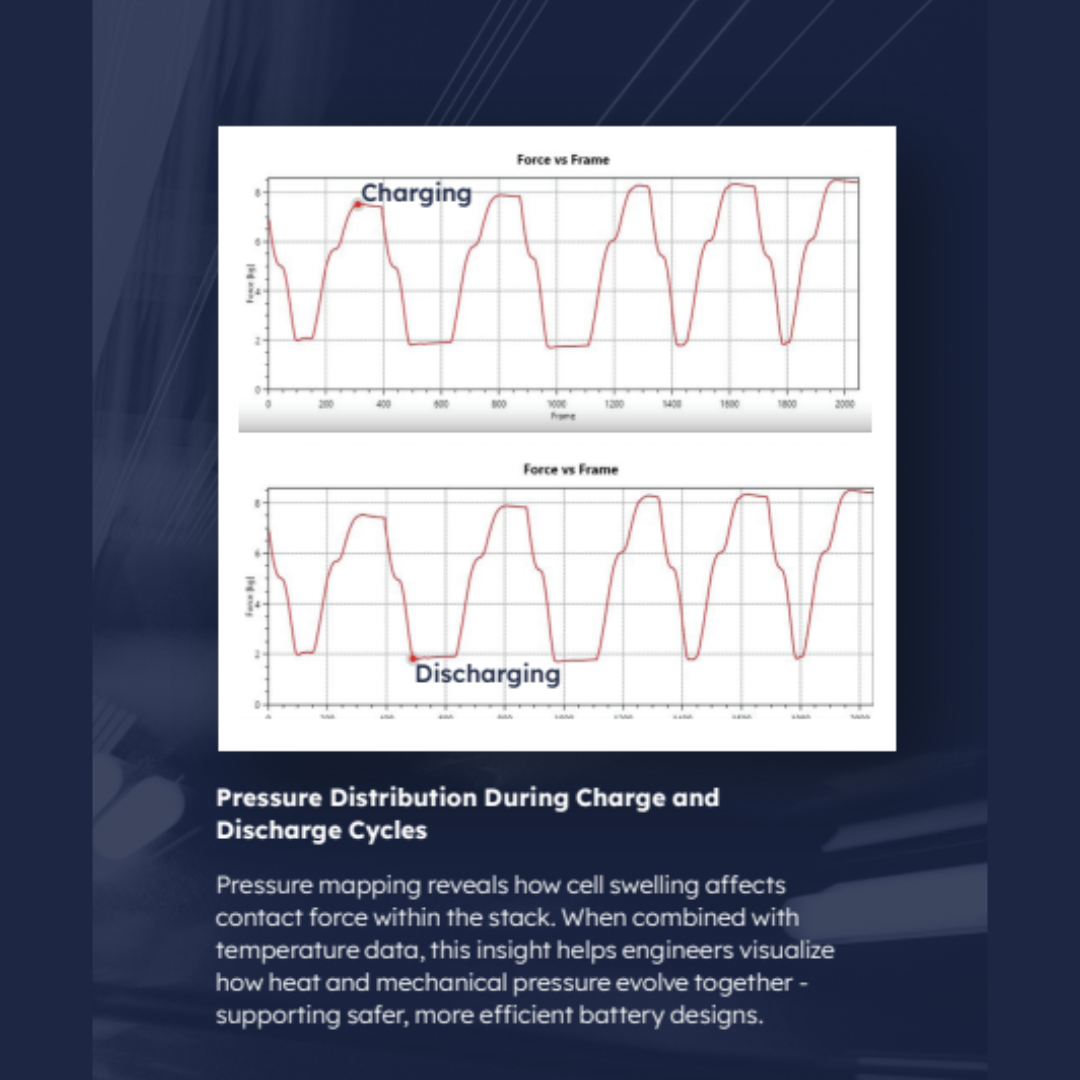
As the adoption of hybrid and electric vehicles accelerates, automotive manufacturers are increasingly focused on maximising battery life, safety, and performance. Most hybrid and electric vehicles utilise lithium-ion batteries, which expand and contract during normal charge and discharge cycles. This expansion and contraction can lead to issues such as delamination, degradation, and even thermal runaway.
To address these challenges, engineers are employing tactile pressure sensors to detect the subtle pressure changes caused by cell expansion. By adding temperature mapping to this process, they can visualise thermal propagation across the battery stack. This dual-sensing approach helps identify the precise moments and locations of critical pressure or temperature spikes, allowing for optimisation of fixture design and stack compression strategies.
Key Benefits of Pressure and Temperature Mapping:
– Validates formation processes using pressure and/or temperature data
– Reduces rates of capacity fade
– Restricts thermal expansion and delamination
– Mitigates the risk of thermal runaway in extreme cases
4) Thermal Interface Optimisation in EV Battery Modules
While stack compression and swelling behaviour are vital considerations in lithium-ion battery design, effective thermal management is equally important for ensuring safe and consistent performance, particularly under high loads and fast charging conditions.
Electric vehicle (EV) battery modules typically utilise cooling plates, thermal interface materials (TIMs), and heat spreaders to regulate temperature. However, uneven surface contact can lead to localised hotspots, which can accelerate degradation and heighten the risk of failure.
Tekscan’s T800 temperature mapping sensor offers a new solution for assessing thermal behaviour across these essential interfaces. It is thin, flexible, and can be trimmed to fit, allowing it to be placed between surfaces such as a cooling plate and a battery cell to measure real-time heat distribution.
Applications Include:
• Evaluating cooling plate-to-cell interface contact
• Assessing TIM coverage and compression uniformity
• Detecting localised temperature build-up
Insights Gained:
• Identify areas of uneven heat dissipation
• Improve interface material and fixture design
• Validate assembly consistency across modules
4) Seating / Comfort
Evaluating ergonomic performance is essential for improving productivity while reducing operator fatigue and discomfort. Pressure mapping measures how the body interacts with a support surface, helping assess automobile seat comfort, design, materials, and durability.
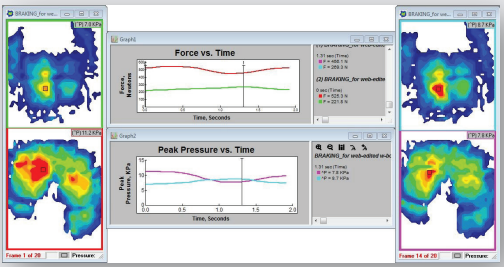
Pressure distribution of a driver as he prepares to apply the brakes. The (red) elevated pressure on his right buttock is a result of lifting his right foot. The image on the right shows the change in pressure distribution that occurs while applying the brakes. Note the (red) high-pressure region shifted from the buttocks to the lumbar region.
Pressure mapping data can facilitate:
• Optimising foam stiffness and cover materials
• Selecting the best ergonomic position of the driver
• Studying ease of occupant ingress and egress
• Measuring changes in the driver’s position during high activity and over long periods of time
In addition to pressure, temperature mapping provides insight into seat heating performance. It reveals heat distribution, cold spots, overheating, and delayed activation factors that affect occupant comfort and satisfaction.
There are many more applications where pressure mapping is utilised in the automotive industry, including seat belt design, steering wheel ergonomics, engine gaskets, windshield wipers, crash test dummies, and many more.
Tekscan’s surface sensing solutions, including both pressure and temperature mapping, reveal critical data at the interface of components. These insights will help identify performance issues, validate designs and optimise manufacturing processes. Contact us today to learn more.
