
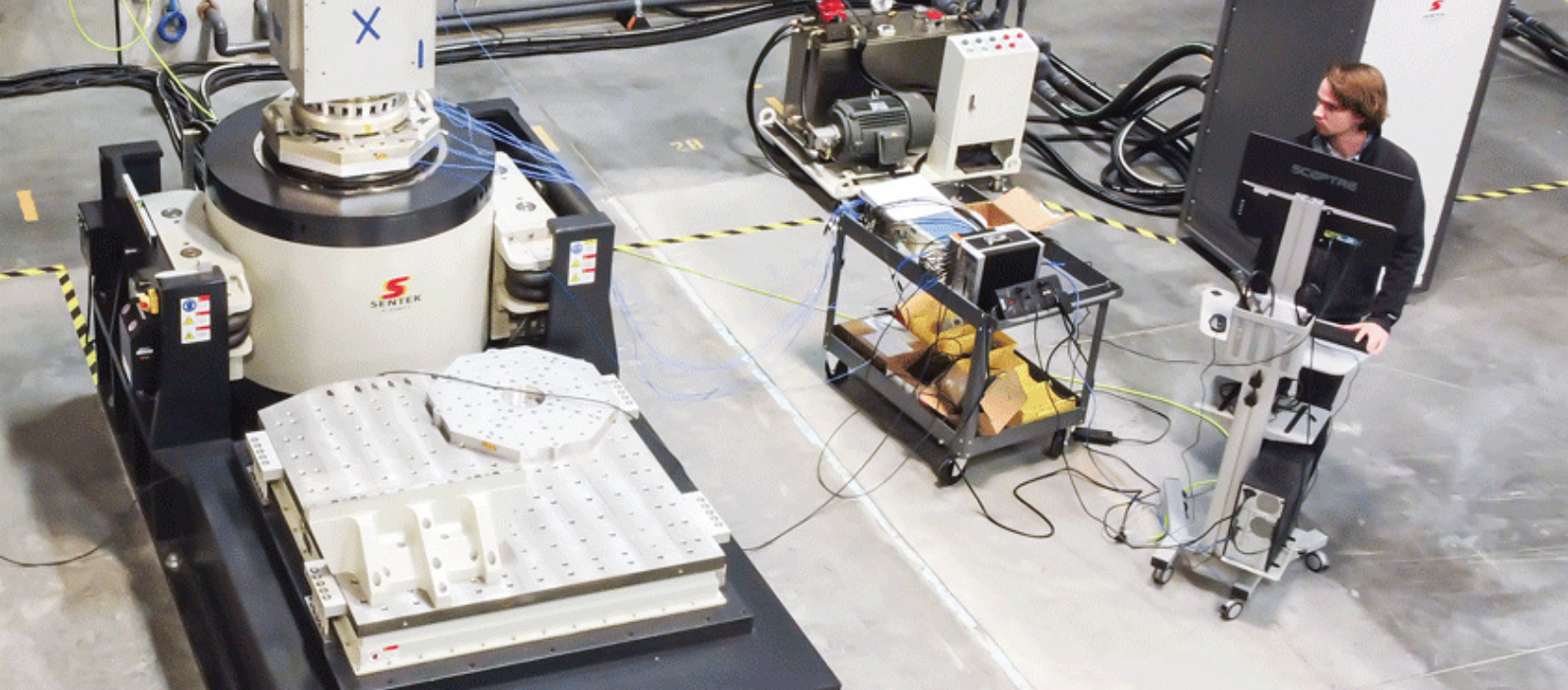
An Introduction to Vibration Testing Systems
Diving into the world of vibration testing systems might seem a bit intimidating at first, especially if you’re buying your first system. However, with the right help and guidance, you can make smart choices that fit your testing needs and goals.
So, why is vibration testing so important? It helps simulate the conditions a product might face during its lifecycle, allowing industries to design products that are durable and perform at their best in all sorts of environments.
At Techni Measure, we are proud to offer vibration testing systems from Sentek Dynamics, DynaLabs, Spektra and APS. Our wide range of systems is designed to cover a wide range of applications, including THV environmental solutions (THV is only available from Sentek Dynamics).
Understanding the features and capabilities of these systems is crucial, and we are here to provide you with the knowledge and support you need. To make this easier, we’ve decided to create a detailed series that delves into the specs, benefits, and real-world applications.
How to Select a Vibration Testing System
Choosing a vibration test system can seem overwhelming, but you can simplify the process by breaking it down into a series of smaller questions.
When selecting a shaker and amplifier system, ensure it meets your testing needs across various specimens and is managed by a vibration controller with sufficient dynamic range for reliable control. The system should have enough measurement channels for vibration control, as well as response collection, along with software capable of handling current and future test types.
To find the right system for a specific test, follow these steps:
1. Determine the test’s frequency range and extreme peak motions (Acceleration, Velocity, Displacement) based on the test specifications. Different test types (Swept Sine, Random, Classical Shock) require different calculations.
2. From the Device Specifications, find the mass of the device under test (DUT) and the mounting surface dimensions to ensure the DUT’s centre of gravity is aligned with the shaker table’s centre. Include the mass of any additional hardware, including head expanders and L-fixtures.
3. Verify that the total mass (DUT, fixtures, fasteners, and accelerometers) is within the shaker’s Maximum Static Payload. Crystal Instruments software has a shaker limits function within the VCS software that automatically warns a user if the shaker is not within spec in several ways. Calculate the required Force by multiplying the Total Moving Mass by the determined Acceleration. Ensure all test parameters (Frequency Range, Force, Peak Acceleration, Peak Velocity, Peak Displacement) are below the shaker’s ratings; if not, choose a more powerful shaker.
Types of Shakers from Sentek Dynamics
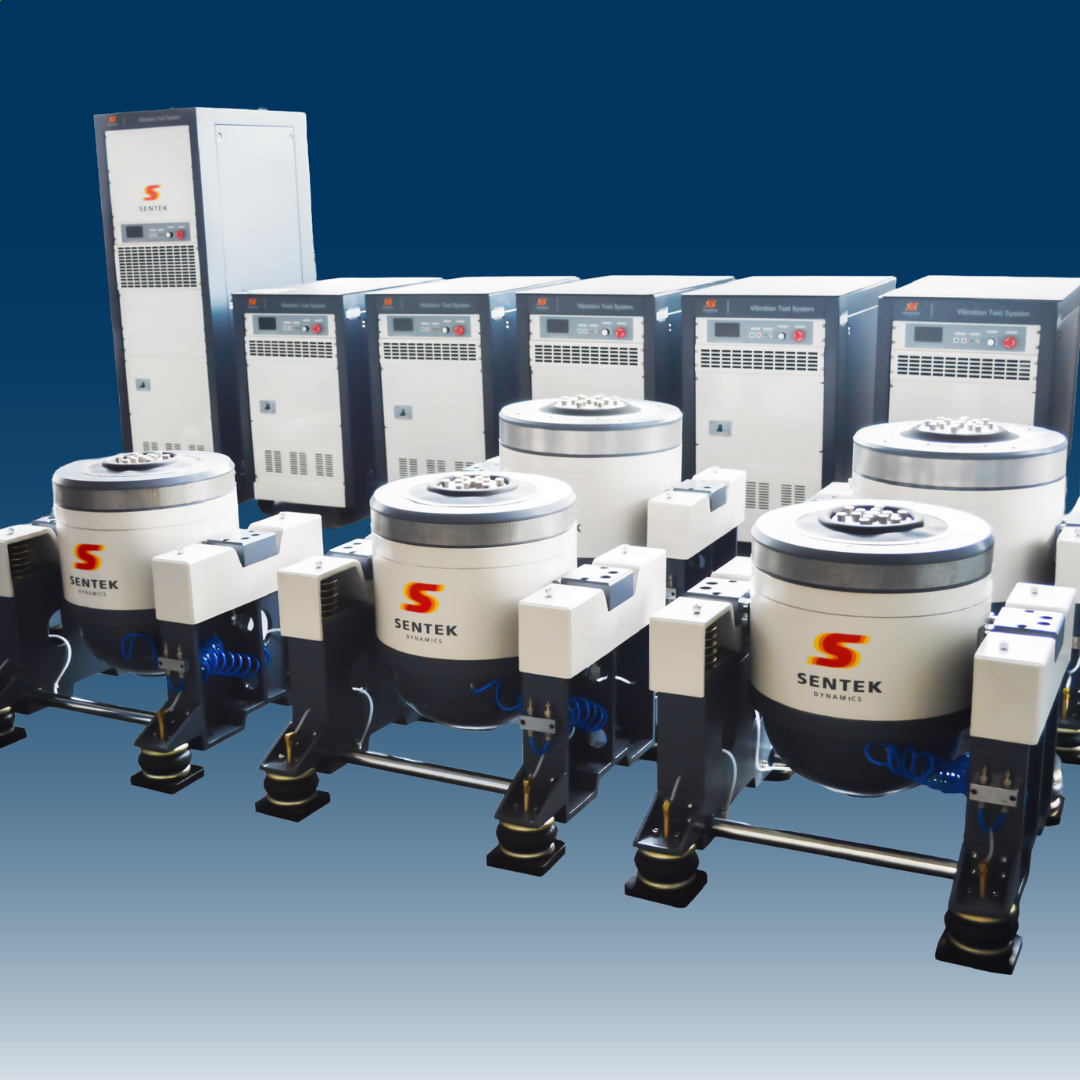
Low-Force (L-Series) Air-Cooled Shakers: The L-Series air-cooled electro-dynamic shakers are designed for the vibration testing of small electronic or mechanical components or other assemblies up to 200kg.
Key applications include:
– Electronic parts and systems – qualification testing
– Computer equipment vibration testing
– Automotive component vibration testing
– Satellite component vibration testing
– General stress screening
Features:
-Armatures diameters from 110 mm (4.3 in) to 240 mm (9.5 in) with metric or American pcd.
-Pneumatic load support
-Rugged trunnion design
-Standard body isolation and guidance system designed to eliminate the use of a seismic base
-Useful vibration control frequency range from 5 to 5000 Hz
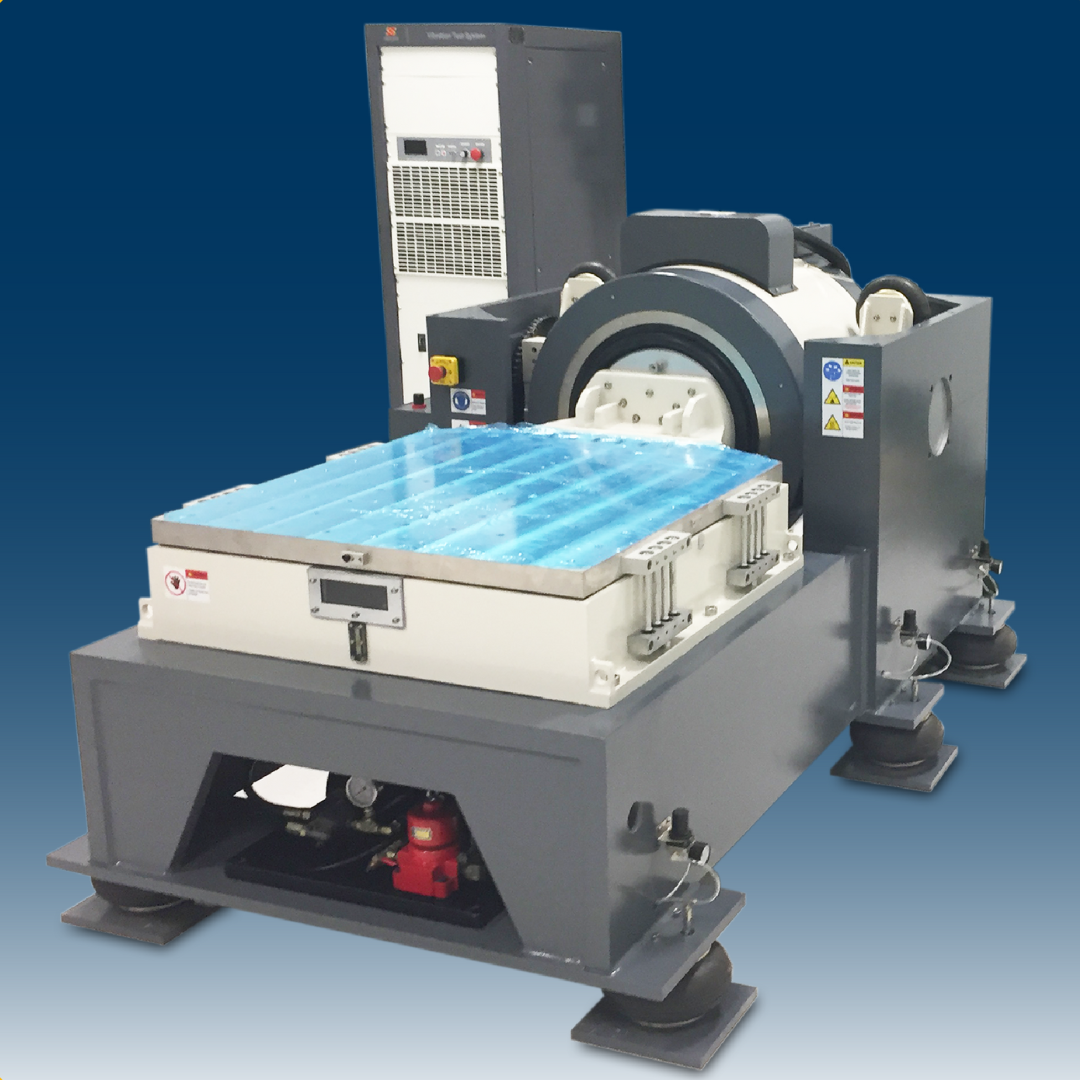
Medium-Force Air Cooled Shakers: The M-Series air-cooled electro-dynamic shakers are designed for the vibration testing of medium-sized payloads such as automotive components and other types of electronics assemblies up to 1000 kg (2200 lb).
Key applications include:
– Automotive parts and systems – qualification testing
– Electronic assembly, computer equipment testing
– Avionics and military hardware vibration testing
– Satellite component vibration testing
– Product and package vibration testing
– General stress screening
Features:
– Armatures diameters from 280 mm (11 in) to 640 mm (25.2 in) with metric or American pcd.
– Internal load support is standard
– Active armature suspension system
– Standard body isolation and guidance system designed to eliminate the use of a seismic base
– Useful vibration control frequency range from 5 to 3000 Hz
– Some systems are available with 76 mm (3 in) displacement
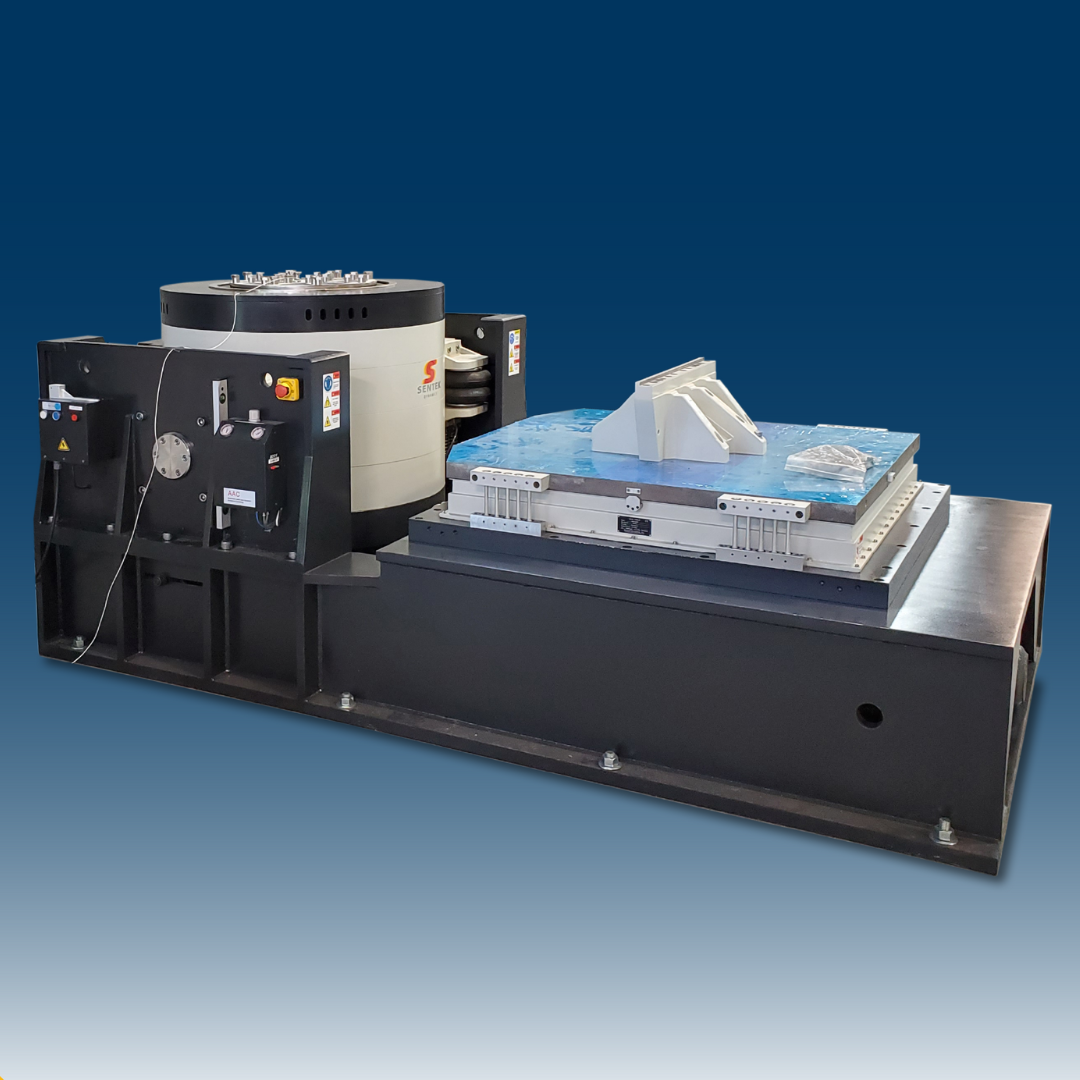
High-Force (H-Series) Water-Cooled Shakers: The H-Series water-cooled electrodynamic shakers are specifically designed for testing large payloads weighing up to 2,000 kg (4,400 lb).
Key applications include:
– Aerospace Vibration Testing
– Automotive Vibration Testing
– Military Vibration Testing
Features:
– Armature diameters range from 445 mm (17.5 in) to 640 mm (25.2 in)
– Sturdy trunnion design
– Automatic centring of the static and dynamic armature
– Motorised gearbox for shaker rotation
– Effective vibration control frequency range from 5 to 2,500 Hz
– Some systems offer a displacement capability of 76 mm (3 in)
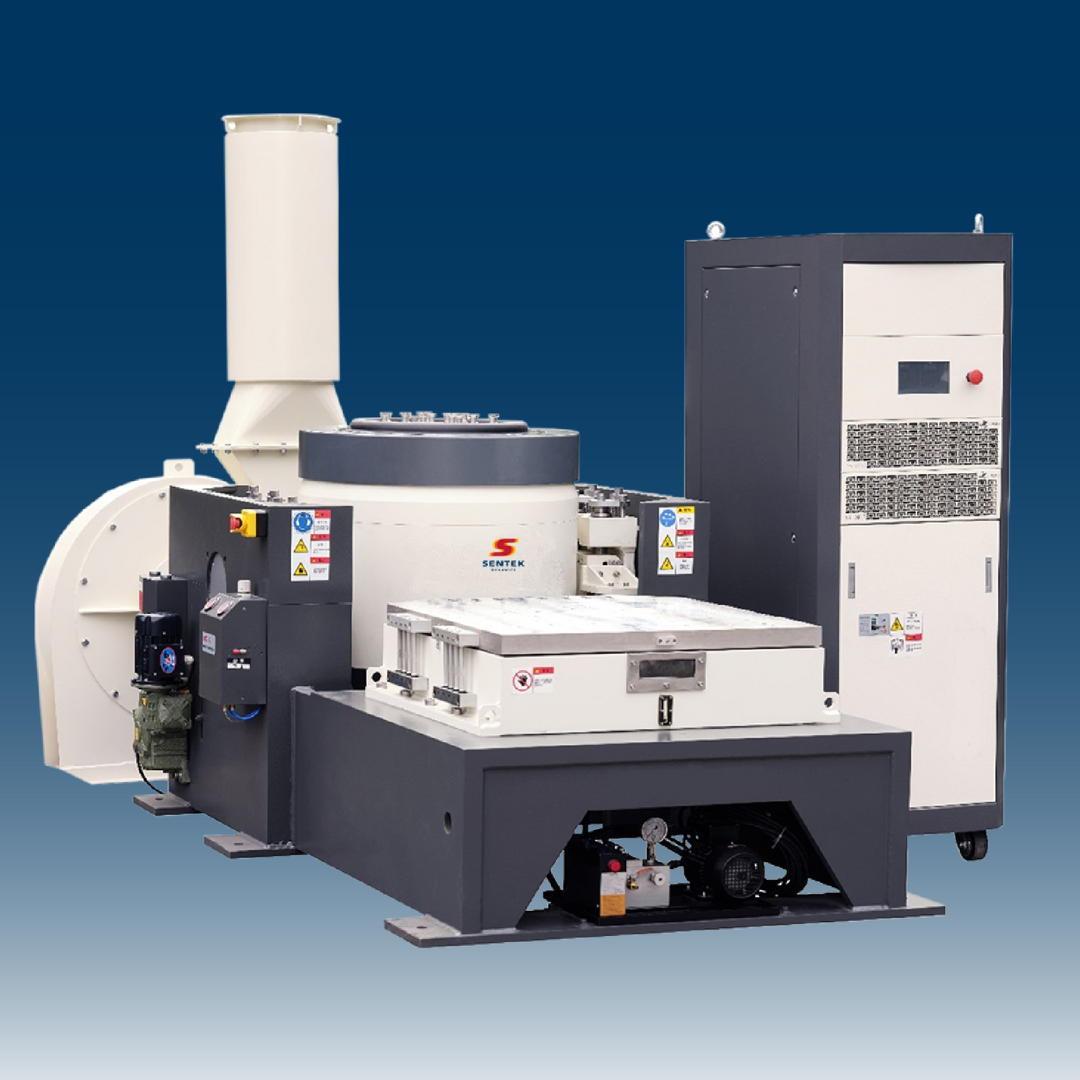
Extra High-Force Water-Cooled Shakers: The E-Series water-cooled electro-dynamic shakers are designed for the vibration testing of large-sized payloads up to 6000 kg (13,200 lb).
Key applications include:
– Aerospace Vibration Testing
– Automotive Vibration Testing
– Military Vibration Testing
Features:
– Armature diameters from 640 mm (25.2 in) to 860 mm (33.9 in)
– Rugged trunnion design
– Automatic static and dynamic armature centering
– Motorised gearbox for shaker rotation
– Useful vibration control frequency range from 5 to 2200 Hz
– Some systems are available with 76 mm (3 in) displacement
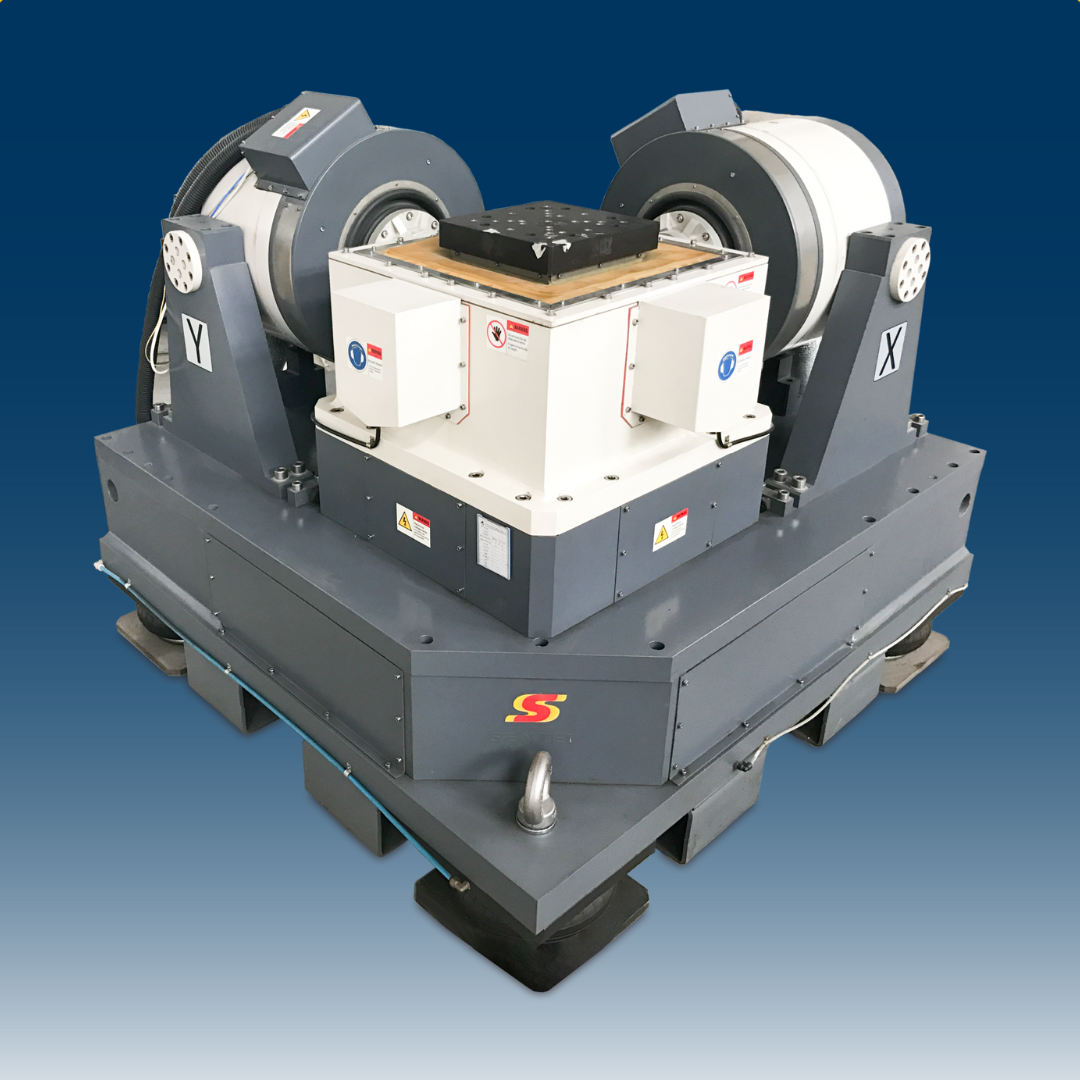
Simultaneous Three-Axis Shakers: Vibrations in the real world occur in every direction, making it essential to test devices simultaneously along all three axes. This is where the MA shakers play an important role. These shakers allow you to thoroughly evaluate your device and assess its durability under realistic conditions. They are robust, dependable, and ideal for simulating the entire range of vibrations that a product may encounter.
Key applications include:
-Testing in accordance with MIL-STD-810G Method 527 requirements
– Testing in accordance with IEEE-344 multi-axis vibration testing
– Vibration qualification testing for aerospace/military components and systems
– Automotive NVH/BSR and component testing
Features:
– Simulates real-world vibration requirements
– Reveals different DUT response dynamics under simultaneous multi-axis excitation that are not possible during single-axis vibration testing
– Identifies unique failures which could not occur during single-axis vibration testing
– Reduces testing time by two-thirds for significant cost savings over single-axis vibration testing
– Can be integrated with Sentek Dynamics’ THV Series environmental test chambers
Long-Stroke (T-Series) Shakers: The T-Series air-cooled shaker is specifically designed for large-displacement vibration testing, making it ideal for aerospace, automotive, and military applications. It has a static payload capacity of up to 1500 kg, ensuring reliable performance under rigorous testing conditions.
Features/Advantages:
-Designed for large displacement vibration tests
-Ideal for aerospace, automotive and military applications
-Product and package durability vibration testing
-Rugged trunnion design
-Automatic static and dynamic armature centering
-Motorised gearbox for shaker rotation
-Usable frequency ranging from 5 to 2500 Hz
-Static payload up to 1500 kg (3300 lbs)
-Armature displacement up to 100 mm (3.9 in)
Contact us today to learn more about vibration testing systems from Sentek Dynamics, DynaLabs, Spektra and APS.
