
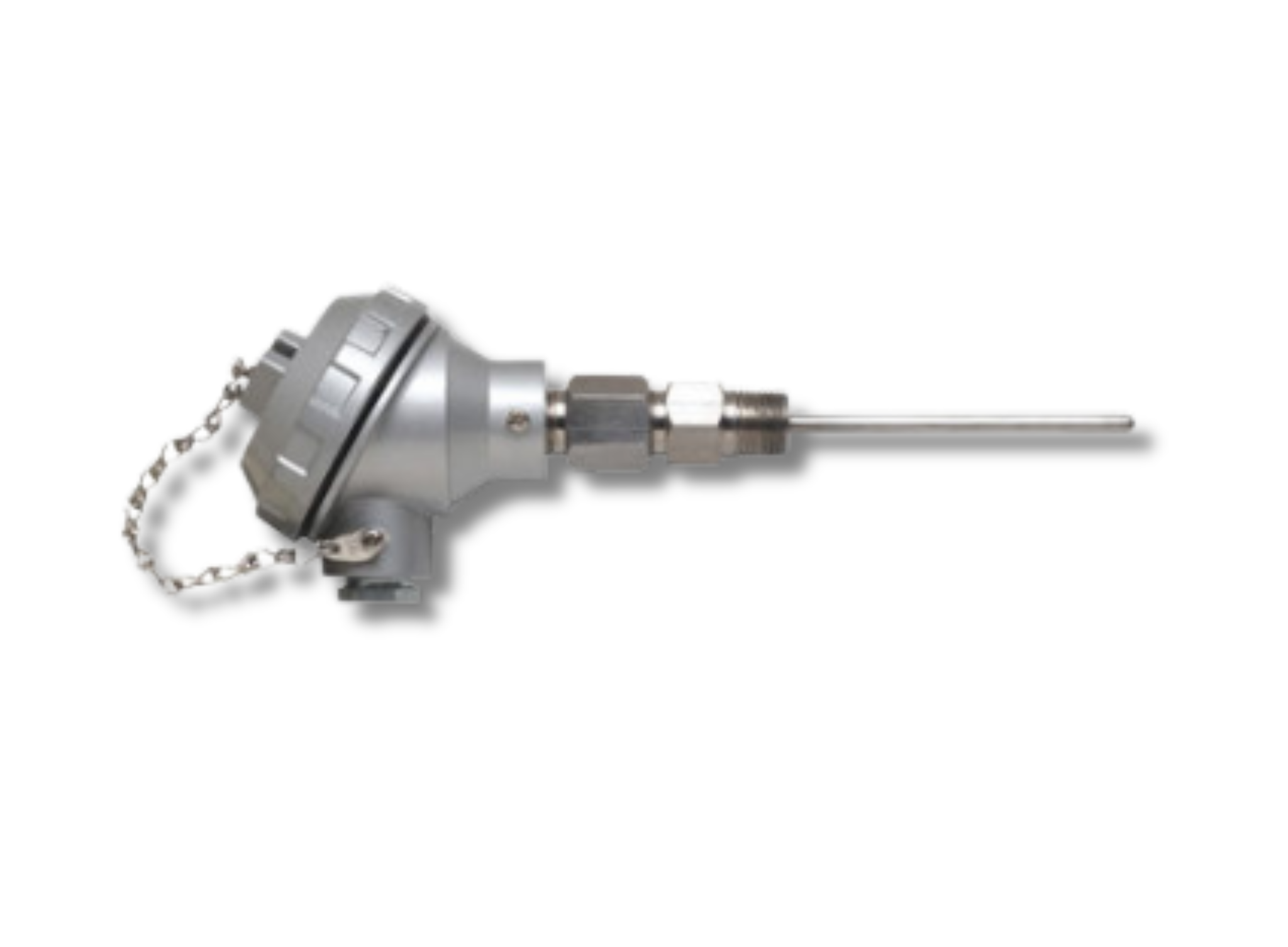
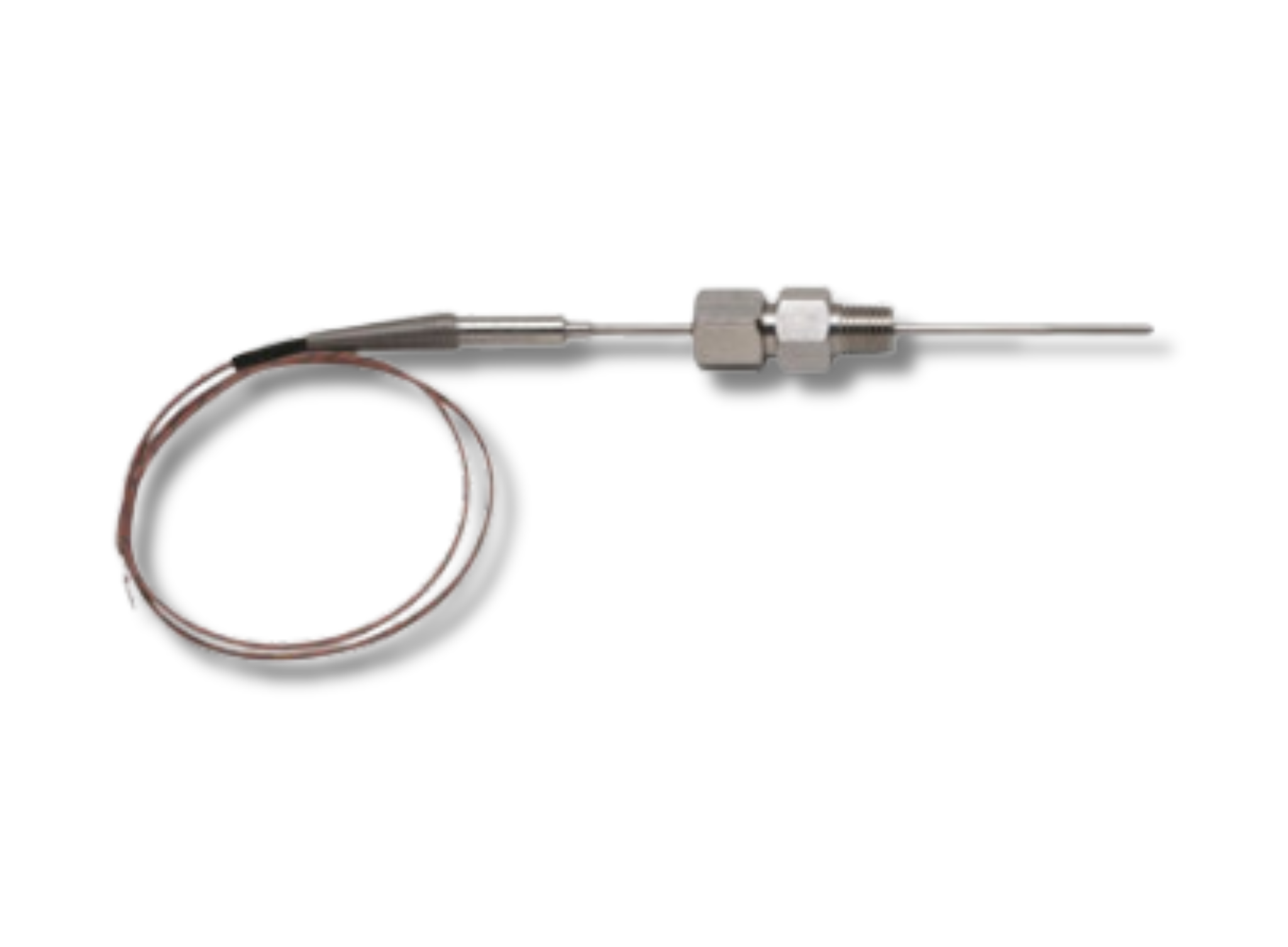
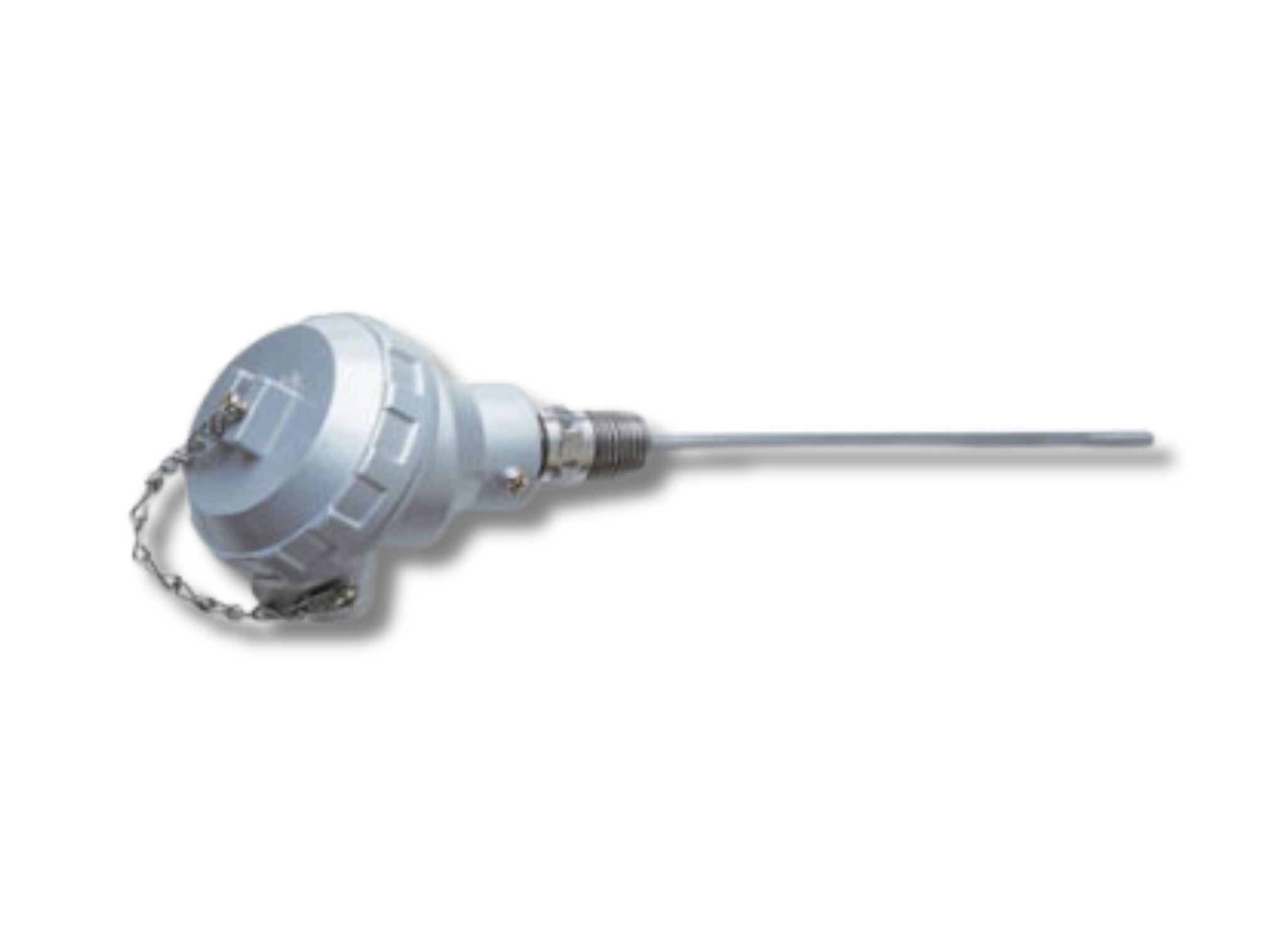
Resistance Temperature Detectors (RTDs) operate by measuring changes in electrical resistance that occur in relation to temperature variations. Typically, as the temperature increases, the resistance also increases. The most commonly used material for RTDs is platinum. There are various options available for sheath materials, probe designs, and lead wire outputs.
| SERIES | DESCRIPTION | RANGE F.S |
|---|---|---|
| ERTD41 | Wirewound copper element, 10 Ohm | -70° C to + 150° C |
| ERTD42 | Wirewound Nickel element, 120 Ohm | -40° C to + 180° C |
| RTD43 | Wirewound Platinum element, 100 Ohm | -250° C to + 600° C |
| MRTD43 | Thin film Platinum element, 100 Ohm | -50° C to + 550° C |
| RTD44 | Wirewound Platinum element, 100 Ohm | -250° C to + 800° C |
| ARTD44 | Wirewound Platinum element, 100 Ohm | -196° C to + 600° C |
| RTD45 | Wirewound Platinum element, 100 Ohm | -250° C to + 600° C |
| RTD86 | Wirewound Platinum element, 200 Ohm | -250° C to + 600° C |
| MRTDF430 | Thin film Platinum element, 1000 Ohm | -50° C to + 550° C |
There are several choices to make in the selection of any Conax Technologies RTD assembly. Firstly, we would need to know the sensor element type, which would usually be dictated by the required temperature measurement. We would also need to know the tolerance class required and the sensor lead configuration. This can be 2, 3 or 4-wire, or even dual-wire configurations. Then we would need to know your choice of sheath material and size, both diameter and length. Termination styles vary from simple wire connections and cable assemblies, through to fitted terminal head boxes. Mounting considerations might also include the use of a pressure sealing gland, which Conax Technologies also manufactures.
The options available are extensive, so please let us help you find the best solution.
Also available is the MBS range of miniature bearing sensors, which can provide a simple and economic way of monitoring the temperature of bearings in industrial rotating equipment. Contact us to learn more!
