
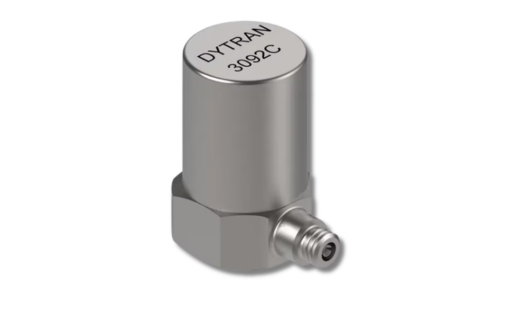
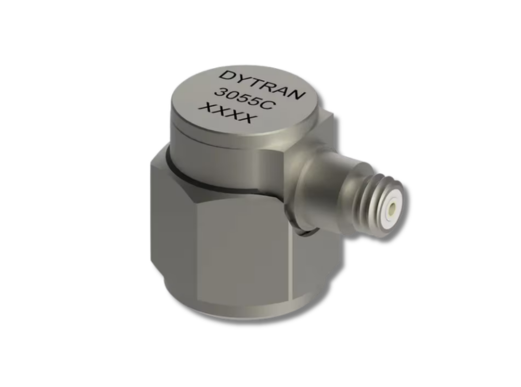
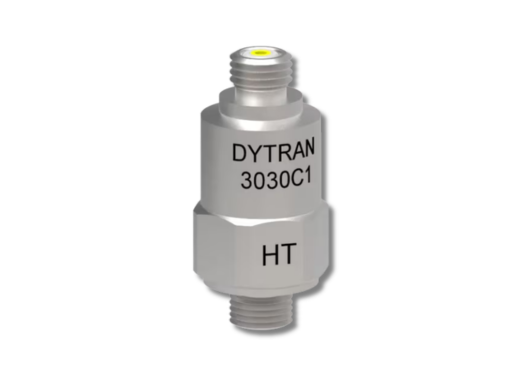
A charge-type piezoelectric accelerometer is robust and designed specifically for high-temperature vibration measurement. The unique design of Dytran’s charge sensors delivers a high dynamic range, long-term stability and ruggedness.
Unlike IEPE sensors, they lack internal electronics, outputting a high-impedance charge signal that requires an external charge amplifier to convert signals into usable voltage.
Key features and benefits
Charge accelerometers are specialised sensors that generate an electrical charge proportional to the vibration or shock they experience. They do not contain microelectronics, which defines their unique capabilities and operational requirements.
High-Temp Operation
Charge accelerometers have a lack of internal electronics, they can operate in extreme heat where standard sensors would fail.
Wide Dynamic Range
They offer an excellent performance across a broad range of frequencies and acceleration levels.
Measurement Flexibility
Charge systems allow you to adjust gain, filtering and time constant at the external amplifier, giving you more control.
Radiation Toleranace
Since they have no internal semiconductors, they are well-suited for use in nuclear and high-radiation environments.
techni measure
Which applications are charge accelerometers used for?
Charge accelerometers are essential for high-stress and shock measurements where standard electronics would fail. Their primary applications span industries that operate in extreme heat, high radiation or space-constrained environments.
- Aerospace and Defence: Jet engine testing, rocket and missile development, flight test analysis
- Energy and Power Generation: Gas and steam turbines, nuclear power plants, oil and gas
- Automotive Engineering: Exhaust & powertrain analysis, brake rotor testing, engine compartment studies
