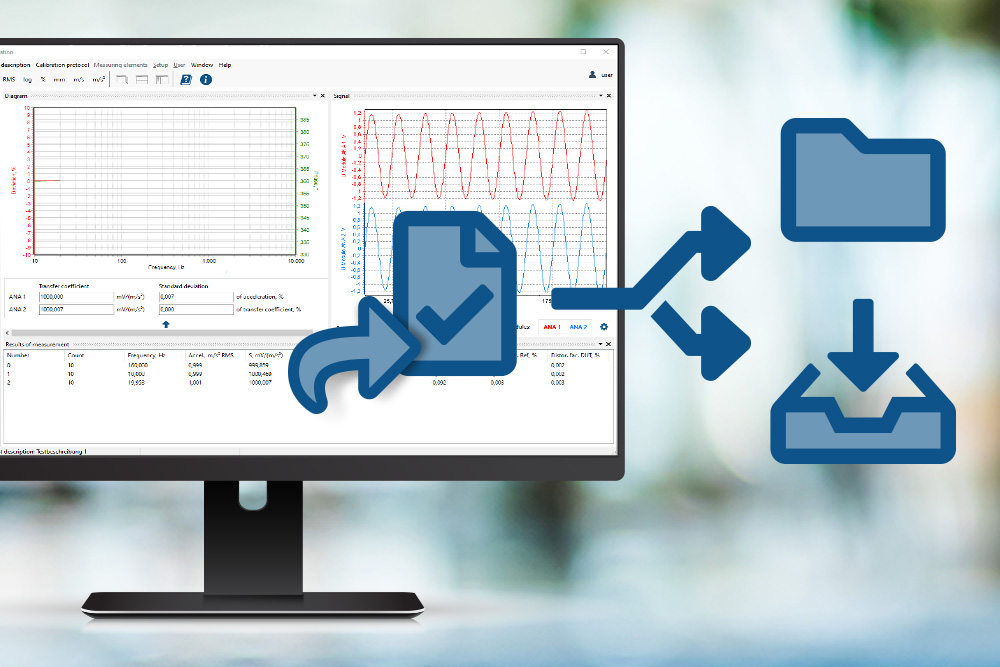
A technical breakthrough for sensor calibration
future-proof solution for the digital sensor age
For analogue and all‑digital sensors
-
Powerful analogue signal inputs
- Various integrated digital DUT inputs
- Software flexibly adaptable to new DUT types
- Traceable to PTB and other national laboratories
For a complex sensor world
- Intelligent DUT database
- Information about any sensors and measurement chains can be stored
- A wide range of additional information for user support
For consistent availability
- Tested long-term stability reduces the calibration cycles of the system
- An intelligent service concept minimises downtime
For simple data exchange
- Calibration data available as XML files
- Integration of eCal™ as a flexible tool for data merging and transformation

Highlights of CS-LEAP Software
Extensive Operating Modes
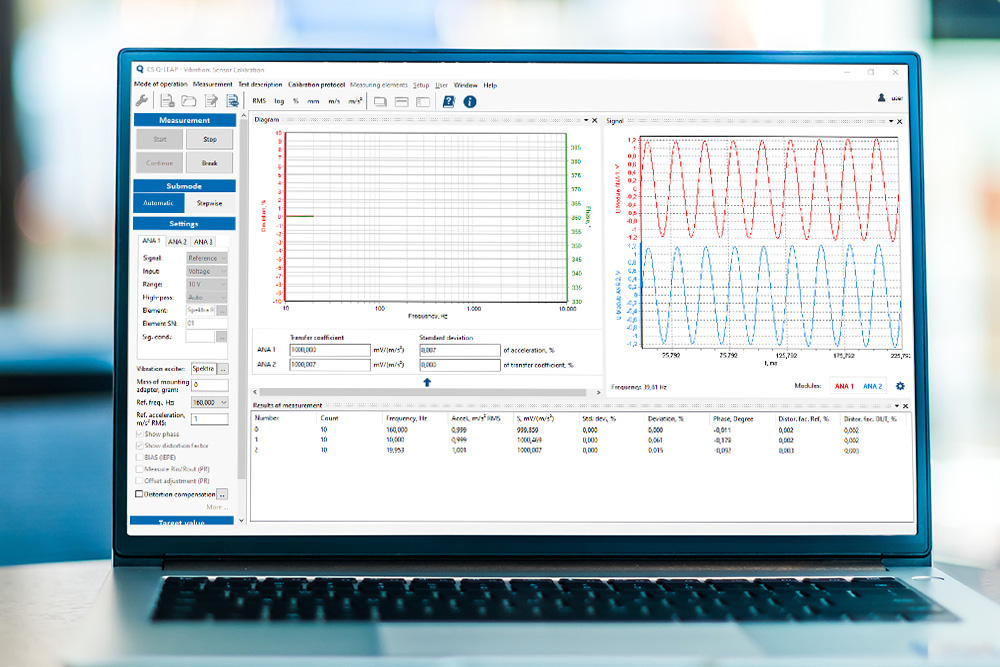
- Sensor calibration – allows the calibration of a wide range of sensors.
- Sweep – helps to establish whether a tested sensor can actually be calibrated.
- Measurement – for the calibration of vibration calibrators.
- Generation – designed to generate one of the vibration quantities with high precision.
- Primary calibration tasks – calibration, measurement and generation
- Self-test for the HERO™ vibration control unit*.
*for CS Q-LEAP™ systems
Easy generation of calibration setups
-
Easy storage of the complete calibration process in setup files
- Simple drawing up of setups by guided procedures
- Automatic loading of the device under test into the setup when using TEDS or ID modules
- Fail-safe operation of the test setup based on the performance data of the exciter
Extensive Operating Modes
-
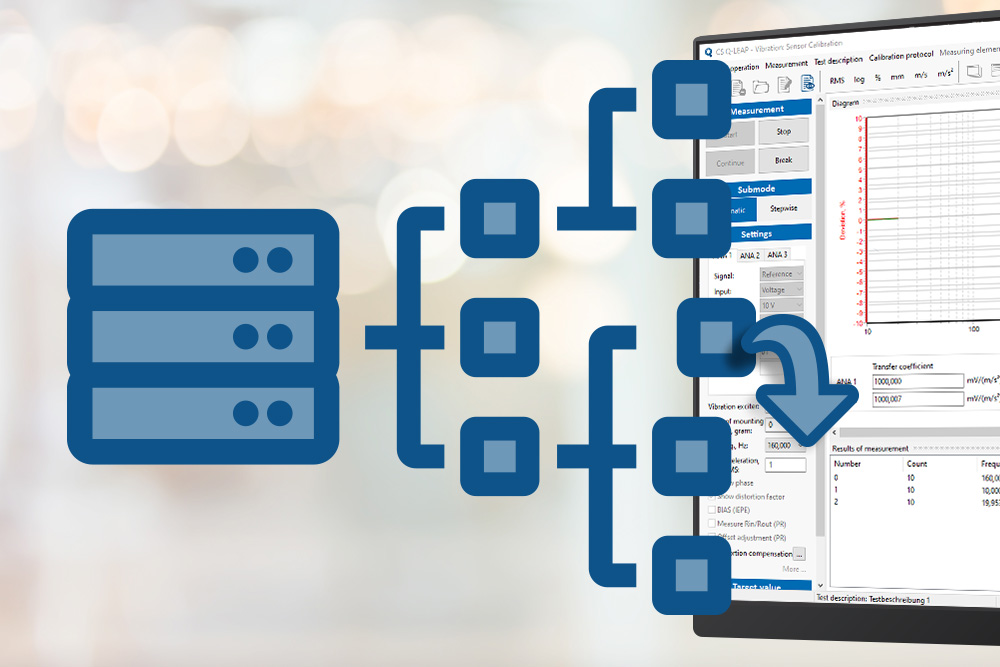
The high-performance search tool will find any test item that has ever been calibrated by the system
- Administration of sensor type templates
- Easy introduction of new test items based on sensor type
- Easy administration of sensor data, including calibration intervals, ID numbers (TEDS, DALLAS-ID, etc.) and many more
Easy data storage, export and exchange
-
Storage of setup and calibration data in calibration log files in conformance with ISO 17025
- Easy data export into text or spreadsheet files (e. g., MS Word®, MS Excel®) to generate calibration certificates ready for print-out
- Easy data exchange with third-party applications
- Optional:
– Data export into any other data format
– Storage of calibration log files on the database server